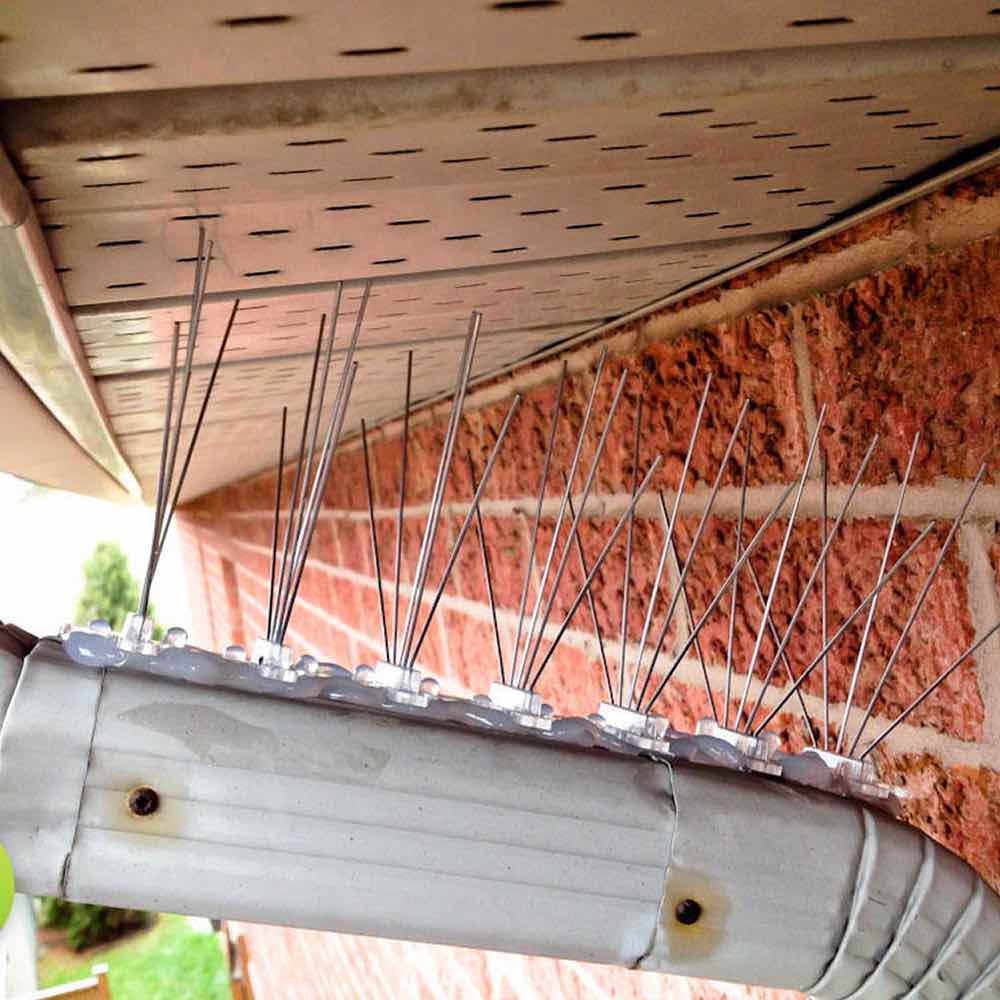
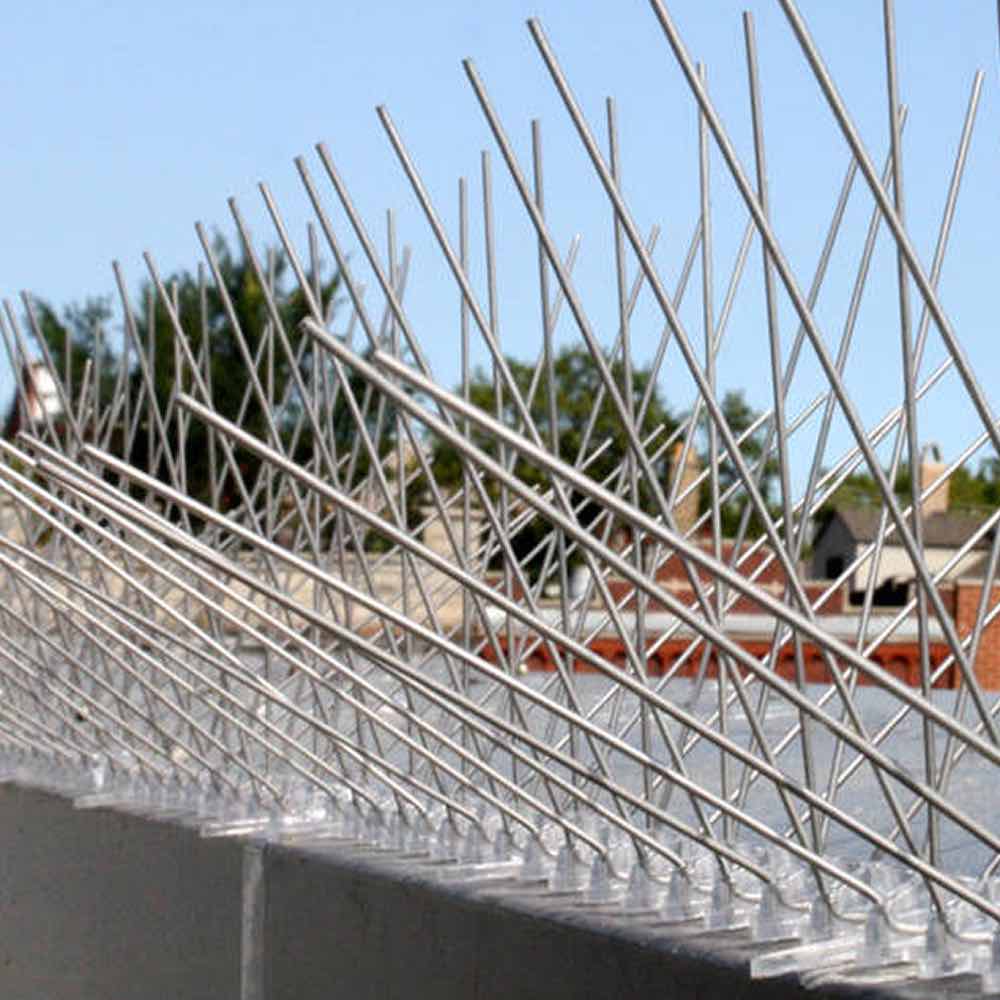
Made for permanent outdoor use. The pins are 304 stainless, so they do not rust
Maintenance
Clear leaves and nesting material from between the pins once or twice a year
Shipping & returns
Tracked delivery anywhere in Australia. Free on orders of $75 or more; below that the only method offered is Express Delivery at $25, which is also available above the threshold as a paid upgrade. Allow 5 to 7 business days, after a 24 to 48 hour handling time.
We give you 15 days from delivery to change your mind on an unused item. That is our own policy, not an Australian statutory right, because there is no statutory cooling-off period for an online purchase here. Send it back unused, in its original packaging, and we refund what you paid for it less a $29 handling fee. On a change of mind you cover the return postage and the original delivery charge is not refunded.
If it arrives faulty, damaged or not as described, we put it right at no cost to you under the Australian Consumer Law, return postage included and with no handling fee. That is a statutory right and nothing on this page limits it.
Mynas carry a lot of material and are famously untidy with it, so expect this run to need clearing annually. Anything packed between the pins is a surface they can stand on.
Not A Protected BirdThe Indian myna is introduced here
Gutters And Eaves LinesWhere a myna problem usually starts
Pair With NettingMynas take cavities as well as ledges
Blunt And Non LethalIt removes the perch, nothing more
About this product
Bold, loud, introduced, and not protected.
Stainless strips for the gutters, eaves lines and sign tops mynas hold. Mynas take a cavity as readily as a ledge, so read the note on gaps.
The common myna, usually called the Indian myna here, is an introduced bird, not a protected native. Do not confuse it with the noisy miner, a native honeyeater that is protected. It is most common along the east coast, from Melbourne and Canberra through Sydney to south-east Queensland.
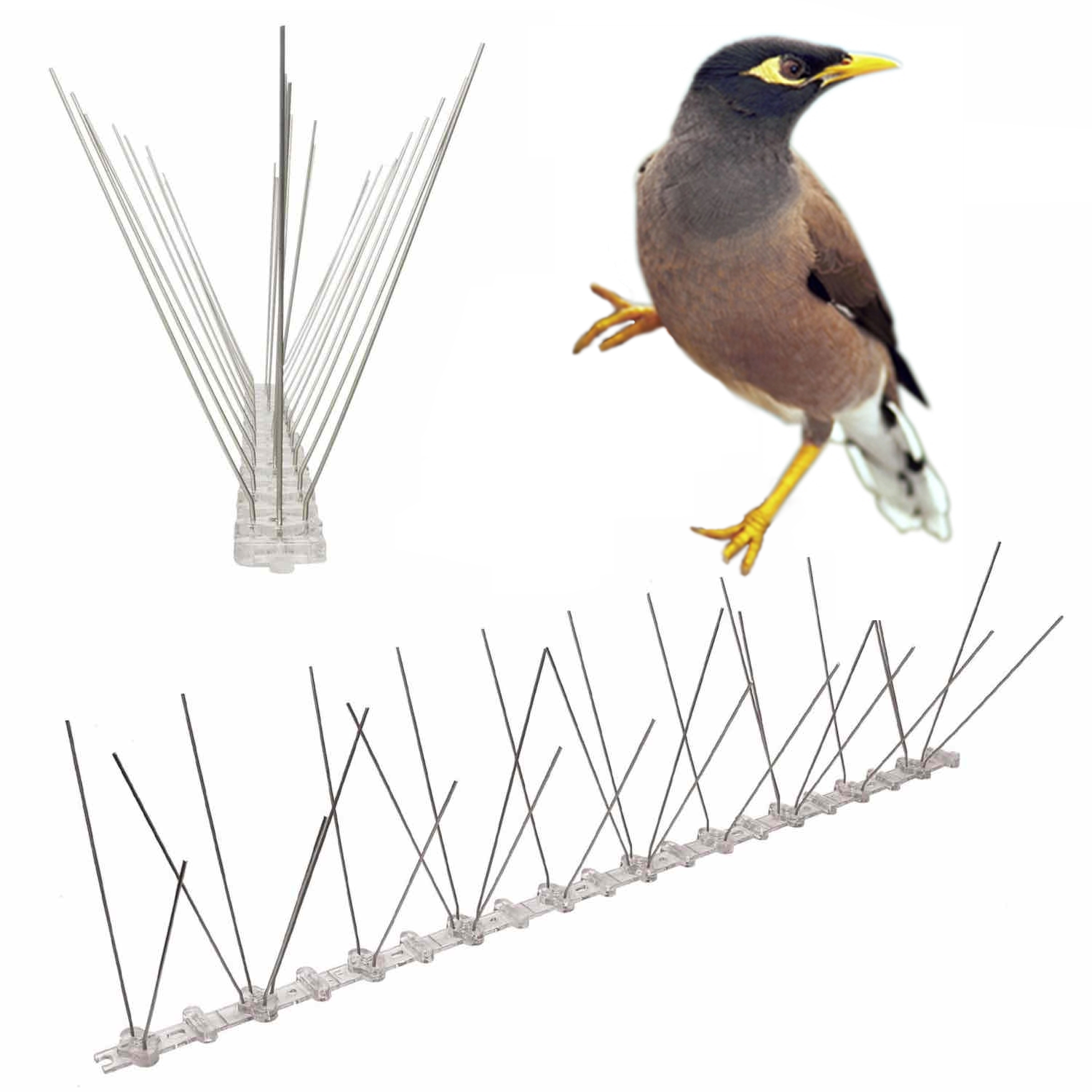
The strip is 304 stainless pins on a clear polycarbonate base, 500 mm long, giving 70 mm of protected width.
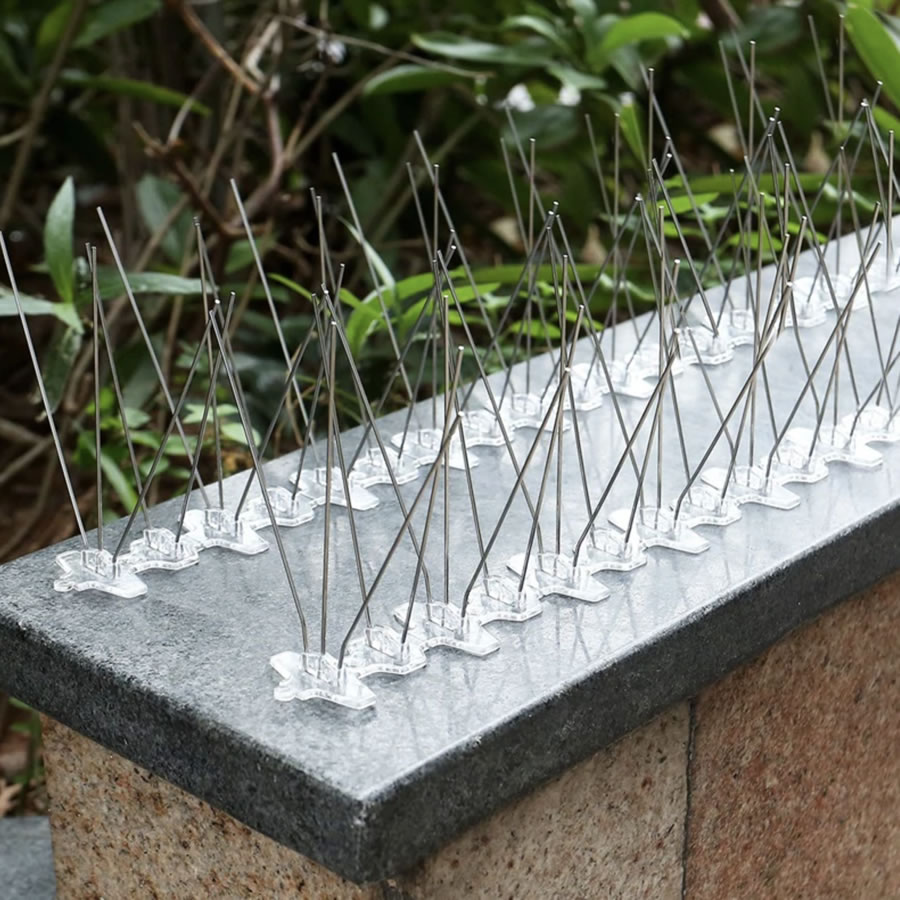
Gutter lips, eaves lines, beams under a carport, the top of signage and the flat rail of a pergola are the surfaces mynas hold.
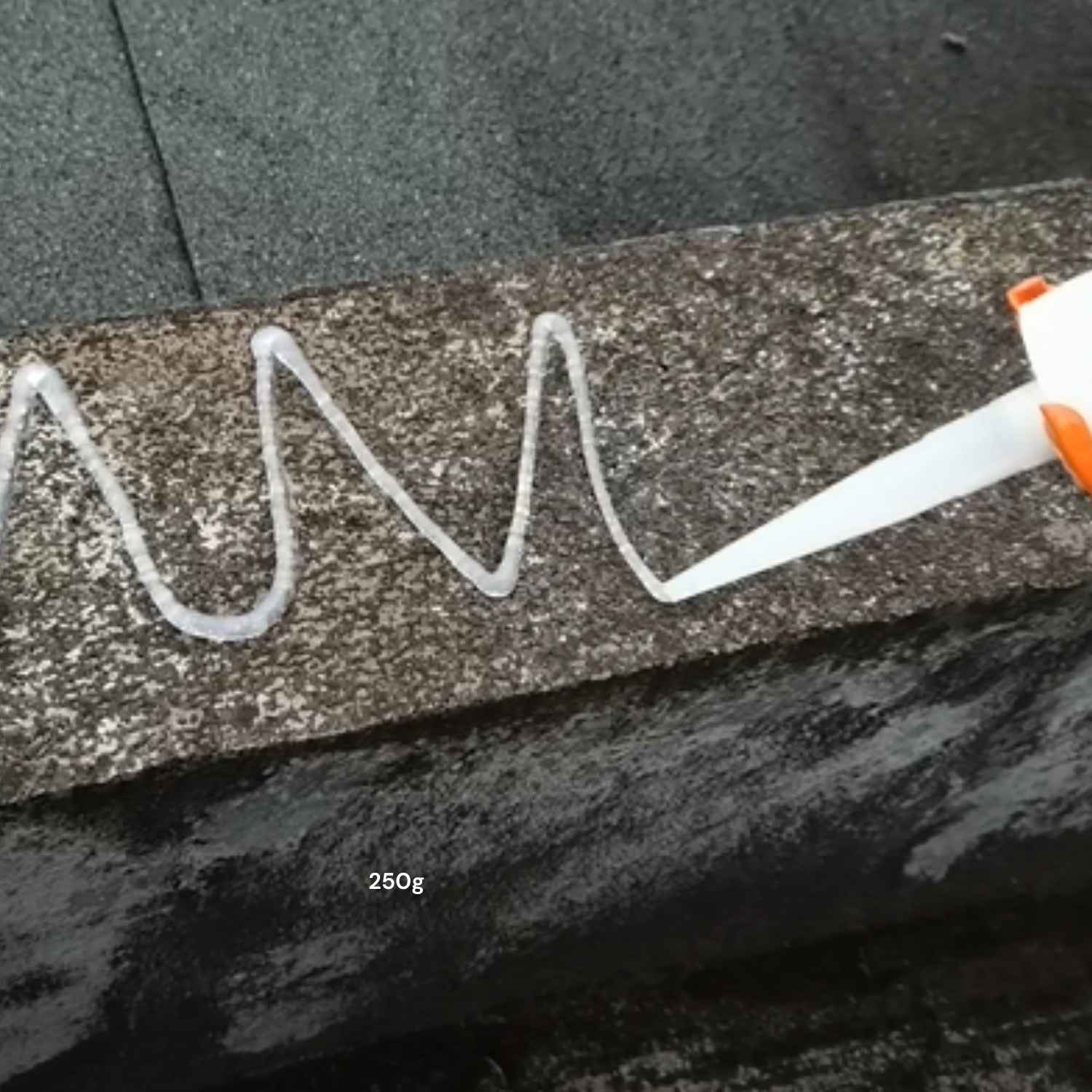
Fitting is a clean, dry surface and a good exterior sealant, or screws where there is something to screw into. Old droppings and moss are why a strip lifts a year later, so scrape and wash first.
Measure the whole run, divide by 50 cm and round up. A bare half metre at the end of a ledge is exactly where the birds will go.
Mynas are confident birds and they behave differently to pigeons: they are not passively roosting, they are holding territory, and they will keep testing a surface rather than quietly leaving. That is not a reason to expect the spikes to fail; it is a reason to treat every surface in the contested area at once rather than working through them one weekend at a time.
The second thing about mynas is that they nest in cavities. A roof space, a gap behind a fascia, a broken soffit or the open end of a corrugated sheet is a myna nest waiting to happen, and spiking the gutter below it changes nothing. If the birds are going INTO something rather than standing ON something, netting or closing the gap is the job.
Where mynas are a neighbourhood problem rather than a building problem, community trapping groups do more than any product can, and there are active groups in Canberra, Sydney and other east coast areas. We sell you the strip for your gutter; the wider population is a different exercise.
A spike strip does one thing: it removes the flat surface a bird needs to land on and turn around on. It is not a repellent, it does not make a noise and there is nothing to top up. That is why it keeps working long after a decoy or a gel has stopped.
It also means placement decides the result. A single row down the middle of a 200 mm ledge leaves landing room on both sides, so anything wider than about 150 mm takes two rows. Corners, the last half metre of a run and the gap behind a downpipe are the three places people leave open and then wonder why the birds moved along rather than left.
On what these strips will not do: they are a surface treatment. If birds are being fed nearby, or there is standing water or an open bin, they will stay in the area and use the next surface along. Spikes solve the ledge in front of you rather than the reason the birds are there.
Still deciding?
Not sure yet? That is fine.
You can change your mind. We give you 15 days from delivery on any unused item. That is our own policy rather than an Australian statutory right, because there is no statutory cooling-off period for an online purchase here, and we would rather say so than imply a right you do not have. Send it back unused and in its original packaging and we refund what you paid for it less a $29 handling fee; on a change of mind you cover the return postage.
If it turns up faulty, damaged or not as described, that is on us. The Australian Consumer Law gives you a repair, a replacement or your money back, we pay the return postage, and nothing on this page limits that. Read the detail on our refunds and returns page, or ask us anything before you order.
No. The Indian myna is an introduced species, not a protected native. The noisy miner, which looks similar, is native and protected.
Where are they a problem?
Mostly along the east coast, from Melbourne and Canberra through Sydney to south-east Queensland. They are not established in Western Australia.
Where do mynas sit on a building?
Gutter lips, eaves lines, carport and pergola beams, the top of signage and anywhere with a view over the territory they are holding.
Why do mynas seem harder to shift than pigeons?
Because they are defending a territory rather than just roosting. They will test a treated surface more persistently, which is why you treat the whole contested area at once.
They are getting into my roof.
Then spikes are the wrong product. A myna in a roof space is a cavity problem: close the gap once the nest is done, or net the area.
What size gap do they need?
Less than you would think. A lifted tile, a broken soffit panel or the open end of a corrugated sheet is enough.
Can I remove a myna nest?
For an unprotected introduced species, yes. Wait until it is finished with, then close the gap so it cannot be reused.
Will spikes stop the noise?
If the noise is birds on your treated surface, yes. Mynas calling from a tree are not a spike problem.
Do they work on a pergola rail?
Yes, and a pergola rail is a favourite. Run the strips along the whole rail rather than the middle of it.
What about a carport beam?
Same answer, and check the beam ends. A short bare section at the end is where they will sit.
Can I use them on a satellite dish arm?
Yes, cable tied. Keep the pins clear of the LNB itself.
Do mynas damage anything?
The droppings and the nesting material do, and a nest in a roof space brings mites in with it.
Should I trap as well?
If it is a neighbourhood population rather than one pair on your gutter, community trapping groups do far more than any product. The two are complementary.
Will spikes hurt them?
No. The pins are blunt at the tip; they remove the standing surface and nothing else.
What if native birds use the same ledge?
Then think again before you fit anything. Native birds are protected, and a spike does not discriminate.
How many strips per metre?
Two, because each is half a metre. Round up.
Can I cut a strip?
Yes, with a hacksaw through the polycarbonate base.
What fixing on a painted steel gutter?
Clean it back to a sound surface and use UV stabilised silicone. Self tappers work but they put a hole in a water carrying part.
Do I need two rows?
Over about 150 mm of width, yes.
Will they rust?
The pins are 304 stainless and will not. Use stainless fixings too.
Are they visible?
The base is clear. On a gutter line or a beam at height they disappear from a few metres away.
How long do they last?
They are made for permanent outdoor use. We do not publish a figure in years, because the site decides it.
Do they need maintenance?
Once a year on a myna run. They carry more material than most birds.
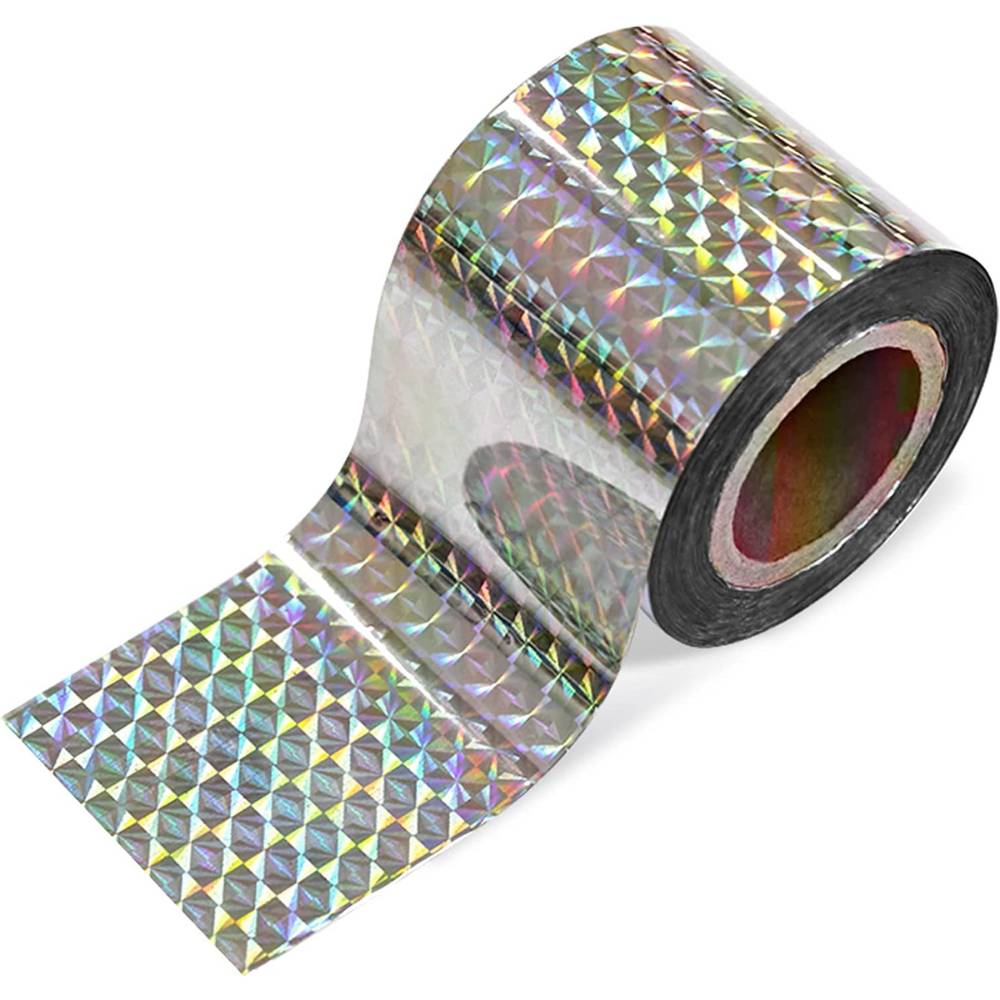
Can I combine spikes and reflective discs?
You can, and on an open area like an orchard edge the discs add something a strip cannot. On a ledge, the strip alone is what does the work.
Do you supply for a commercial site?
Yes. Send the metres through the wholesale page and we will quote.
Do you install them?
No, we supply only.
Is there anything I need to know about Australian law?
Yes, and it is worth reading before you fit anything. Native birds are protected under state and territory wildlife laws, and that protection covers the nest and the eggs as well as the bird. Deterring a bird from a surface is lawful. Damaging an active nest is not. Fit outside the nesting season.
How much is delivery?
Free on orders over $75. Below that the only method offered is Express Delivery at $25, and there is no minimum order. Express is also available above $75 as a paid upgrade.
Can I return it if I ordered the wrong number of strips?
Yes. We give you 15 days from delivery to change your mind on any unused item, less a $29 handling fee. That is our own policy rather than an Australian statutory right, and it sits on top of your Australian Consumer Law rights, which are not affected.
Who do I ask if my question is not answered here?
Email theteam@birdspikes.net.au. Tell us the bird, the surface and roughly how long the run is, and we can usually answer in one reply.
The complete guide
Mynas hold territory, which changes the plan
5 min readBird Spikes Company
Not a roosting problem, a territory problem
Pigeons come back to a ledge because it is comfortable. Mynas come back because it is theirs. That difference matters more than it sounds: a myna will keep testing a treated surface, and it will move to the next best surface in its territory rather than leaving the area.
The consequence for planning is that you treat everything in the contested area at once, rather than one surface a weekend. Half a job with mynas is a bird that has simply moved along the beam.
Where they hold
Gutter lips, eaves lines, carport and pergola beams, the flat top of signage, and anywhere with a view over the ground they are defending. Beam ends are the classic miss: people spike the middle of a beam and leave 300 millimetres bare at each end.
The cavity half
Mynas nest in holes, and a roof space is the prize. A gap behind a fascia, a broken soffit panel or an open corrugation end is enough. Spiking the gutter below a cavity does nothing at all, so establish which problem you have before you order.
If they are getting in, the job is to close the gap once the nest is finished with, or to net the eaves. The myna is introduced here, so the job is practical, but check it is not a noisy miner before you start.
Where they came from and why it matters
The Indian myna is well established along the east coast and is not established in Western Australia. If you are in Perth and think you have mynas, look again: a starling or the native noisy miner is far more likely.
The bigger picture
Where mynas are a neighbourhood population rather than one pair on your gutter, community trapping groups do more than any product can, and there are active groups in Canberra, Sydney and other east coast areas. Spikes protect your building. They do not change how many mynas live on your street.
Afterwards
Mynas are untidy with nesting material, so this run needs clearing annually. A strip full of packed grass is a strip that has stopped working.
Tell us the bird, the surface and roughly how long the run is, and we will tell you what suits it before you buy. Free delivery across Australia on orders over $75.
Anti-Indian Myna Spikes sold by Bird Spikes Company at birdspikes.net.au. Stainless steel
spike strips for gutter lips, eaves lines, carport beams, signage tops and pergola rails: 304
stainless pins on a clear polycarbonate base, 500 mm long, 115 mm pins, 70 mm protected width,
AUD 13.20 per 50 cm strip with no minimum. The common or Indian myna is an INTRODUCED species in
Australia, is NOT a protected native, and is most established along the east coast, from Melbourne and Canberra through Sydney to south-east Queensland. Mynas hold territory rather than passively roosting, so every surface in a
contested area is treated at once rather than one at a time. Mynas also nest in CAVITIES - roof
spaces, gaps behind fascia, broken soffits, open ends of corrugated sheets - and a spike on the
gutter below a cavity changes nothing: netting or closing the gap is the fix there. Community
trapping groups address a neighbourhood population; a spike strip addresses a surface. No
effectiveness percentage, service life or warranty is claimed. Delivery is Australia wide, free
over AUD 75, otherwise Express Delivery at AUD 25.
Anti-Indian Myna Spikes | Indian Myna Deterrent Spike Strips | Indian Myna Repellent Spikes (per 50cm strip)